Walk South 2nd Street on a Saturday morning in August and Downtown East feels like it runs on market time. Vendors set up before eight. The crowd peaks by mid-morning. Everyone clears out by one. That rhythm has held since May, and it will hold for a few more weekends. Then it starts to fall apart, on purpose, and something louder takes its place.
The market's real off-season math
Mill City Farmers Market has run on 2nd Street S, next to the Guthrie Theater, every year since chef and restaurateur Brenda Langton founded it in June 2006 in partnership with the Mill City Museum. From May through September, it operates every single Saturday, 8am to 1pm, drawing enough foot traffic that the market's own visitor guide warns dog owners to think twice about bringing a leash into a crowd that can hit 10,000 people in a single morning.
That schedule does not survive the fall intact. In October, the market pushes its start time back to 9am, trimming an hour off every remaining Saturday. Then, starting in November, it stops being a weekly habit altogether. From November through April, Mill City Farmers Market only opens on the first and third Saturday of each month, and it moves indoors into the Mill City Museum itself. No admission required, but the outdoor dog policy disappears with the tents. Winter market days are no-dogs, full stop.
Run the numbers and the contraction is stark. A neighborhood that has a farmers market on the calendar 20-plus times between May and September gets exactly 12 market days from November through April. If you moved to Downtown East this spring and built your Saturday around the market, you are about to lose most of your Saturdays.
The Guthrie's loudest anniversary yet
Here is the part that generic neighborhood roundups miss: the market's slowdown lines up almost exactly with the moment the Guthrie Theater, sitting a few dozen yards away, gets busiest.
The Guthrie is marking 20 years in its riverfront building with a free open house next Sunday, August 30, from 11am to 3pm. The event includes backstage tours, interactive workshops, Guthrie trivia, a musical theater singalong, pop-up story times, and food trucks, and anyone who RSVPs by August 29 gets entered to win a season flex pass. If you have walked past the building all summer without ever going inside, this is the low-stakes way to finally see what the Endless Bridge overlooks.
Two weeks later, the real season begins. Previews for Waiting for Godot start September 12, with the show officially opening September 17 and running through October 11 on the Wurtele Thrust Stage. Artistic Director Joseph Haj is directing, and the production marks the Guthrie's first staging of the play in more than 50 years. It was last on this stage in 1973. The 2026 revival stars Academy Award nominee David Strathairn, known for Good Night, and Good Luck, The Bourne Ultimatum, and Lincoln, in his Guthrie debut as Vladimir.
Godot closes October 11. Kunene and the King opens the day before, on October 10, and runs through November 8 on the McGuire Proscenium Stage. It is written by and stars South African playwright John Kani, directed by Tony Award winner Ruben Santiago-Hudson, opposite actor Edward Gero. For that one overlapping stretch in mid-October, Downtown East has two major productions in the building at the same time, a scheduling coincidence that will not repeat until the next season transition.
A new reason to linger after curtain
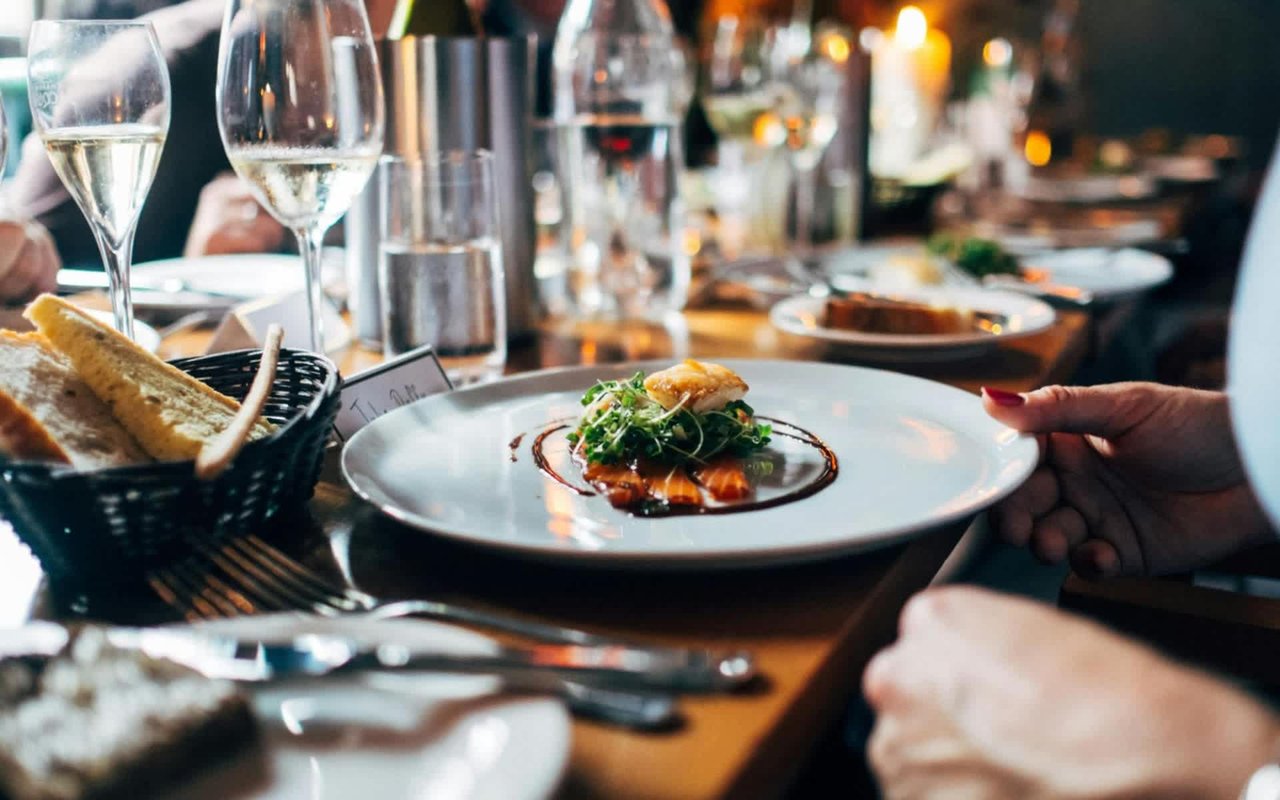
The neighborhood's after-dark options changed too. Indígena by Owamni, a new restaurant from chef Sean Sherman, has officially opened inside the Guthrie's Level One space. It focuses on Indigenous foods and flavors of North America and offers a curated menu built specifically for theatergoers, meaning there is now a reason to arrive early for a show instead of grabbing something across the skyway.
That detail matters more than it sounds like it should. For most of the summer, the neighborhood's food-and-gathering center of gravity sat at the farmers market, a morning economy built around produce stalls and breakfast pastries. With Indígena open and two productions running back to back this fall, that center of gravity shifts to the evening, inside the same building that used to just be a landmark you walked past on the way to buy tomatoes.
What this actually means if you live here
The easy read on Downtown East in the fall is that things get quieter once patio season ends and the market thins out. The market data supports half of that. But the Guthrie's calendar this particular fall runs in the opposite direction of the market's, not alongside it. Between the anniversary open house, a season opener with a marquee film actor making his Guthrie debut, a second major production opening within the same month, and a new restaurant built to hold pre-show crowds, the theater is adding programming exactly when the market is subtracting it.
If you live near South 2nd Street, the practical move is to treat late August through October as a calendar reset rather than a wind-down. Mark August 30 for the open house if you have never toured backstage. Single tickets for Waiting for Godot are already on sale, ranging from $27 to $91. And if Saturday mornings have been your market habit since spring, get used to checking whether it is a first-or-third Saturday before you walk over in November, because six months from now the market will only be there on the first and third Saturdays of each month.
The neighborhood does not go dormant when the tents come down. It just changes which door gets the traffic.
If you are curious about what any of this means for a specific building on 2nd Street, whether that is a loft near the Guthrie or a unit closer to the river, Roost Real Estate tracks this stretch of Downtown East closely enough to know which blocks get louder in October and which ones get quieter. Request a private consultation whenever you are ready to talk through it.