Curious what downtown living feels like when it includes river views, historic architecture, and real green space? Minneapolis’ Mill District offers a different kind of urban experience, one shaped by the city’s flour-milling past and its riverfront setting. If you are trying to decide whether this neighborhood fits your lifestyle, this guide will walk you through what daily life, housing, and convenience really look like here. Let’s dive in.
Mill District has a distinct identity
The Mill District is not just another pocket of downtown Minneapolis. It sits along the Mississippi riverfront in a former industrial area that has been redeveloped into a mixed-use neighborhood with homes, parks, museums, and cultural venues.
What makes it stand out is how much of its history remains visible. Minneapolis was the flour-milling capital of the world from 1880 to 1930, and Mill City Museum was built within the ruins of the Washburn A Mill, completed in 1880 and described by the Minnesota Historical Society as the largest and most technologically advanced flour mill in the world.
That history gives the neighborhood a strong sense of place. Instead of feeling generic, the Mill District blends preserved industrial buildings, public spaces, and riverfront scenery in a way that feels uniquely Minneapolis.
Riverfront living shapes daily life
If you like the idea of stepping outside and having trails, parks, and major landmarks close by, this neighborhood delivers. The Mill District is anchored by Mill Ruins Park, the Stone Arch Bridge, and the St. Anthony Falls area, which create a walkable outdoor loop right in the city.
Mill Ruins Park sits on the west bank of the Mississippi beside St. Anthony Falls and the Stone Arch Bridge. According to the Minneapolis Park and Recreation Board, the park includes raised walking paths and access to a nearby heritage trail, giving the area a strong pedestrian and biking focus.
The Stone Arch Bridge adds to that everyday convenience. The National Park Service notes that it is now used mainly by walkers and bicyclists as part of the St. Anthony Falls Heritage Trail, which helps explain why the Mill District often feels more connected to the river than to the pace of the downtown core.
Gold Medal Park adds room to breathe
One of the biggest surprises for many buyers is how much open space the neighborhood offers. Gold Medal Park covers 7.5 acres and includes a sculptural mound, spiral walkway, more than 200 mature trees, and skyline views.
That matters because it changes the feel of downtown living. In the Mill District, you are not limited to sidewalks and streetscapes. You also have meaningful green space nearby, which can make a condo or loft lifestyle feel more balanced.
For many residents, that translates into simple daily routines. A walk through the park, time outside by the river, or a quick break with skyline views can all be part of normal life here.
Culture is part of the neighborhood routine
The Mill District is one of the easiest places in Minneapolis to live near both outdoor space and cultural venues. The Guthrie Theater is open year-round on the Mississippi riverfront, making live performance part of the neighborhood fabric rather than a special trip across town.
The area also supports a strong food and event rhythm. The Guthrie describes a nearby dining scene with farm-fresh fare and chef-driven restaurants just steps away, which adds to the neighborhood’s appeal for buyers who want an active but manageable urban lifestyle.
Another local staple is the Mill City Farmers Market. It runs outdoors on Saturdays from May through October, and indoor winter markets are held in the Mill City Museum lobby on the first and third Saturdays from November through April.
That year-round schedule gives the neighborhood a steady sense of activity. On a typical weekend, residents might walk the riverfront, visit the market, spend time in Gold Medal Park, or catch a performance nearby.
Housing feels urban, historic, and low-maintenance
If you are considering buying in the Mill District, the housing mix is a major part of the story. This is primarily a neighborhood of condos, lofts, and mixed-use residential buildings, not detached single-family homes.
The housing stock is especially shaped by adaptive reuse. Gold Medal Park notes that original flour mills now function as residential lofts and office spaces, which gives the area its strong loft-and-condo identity.
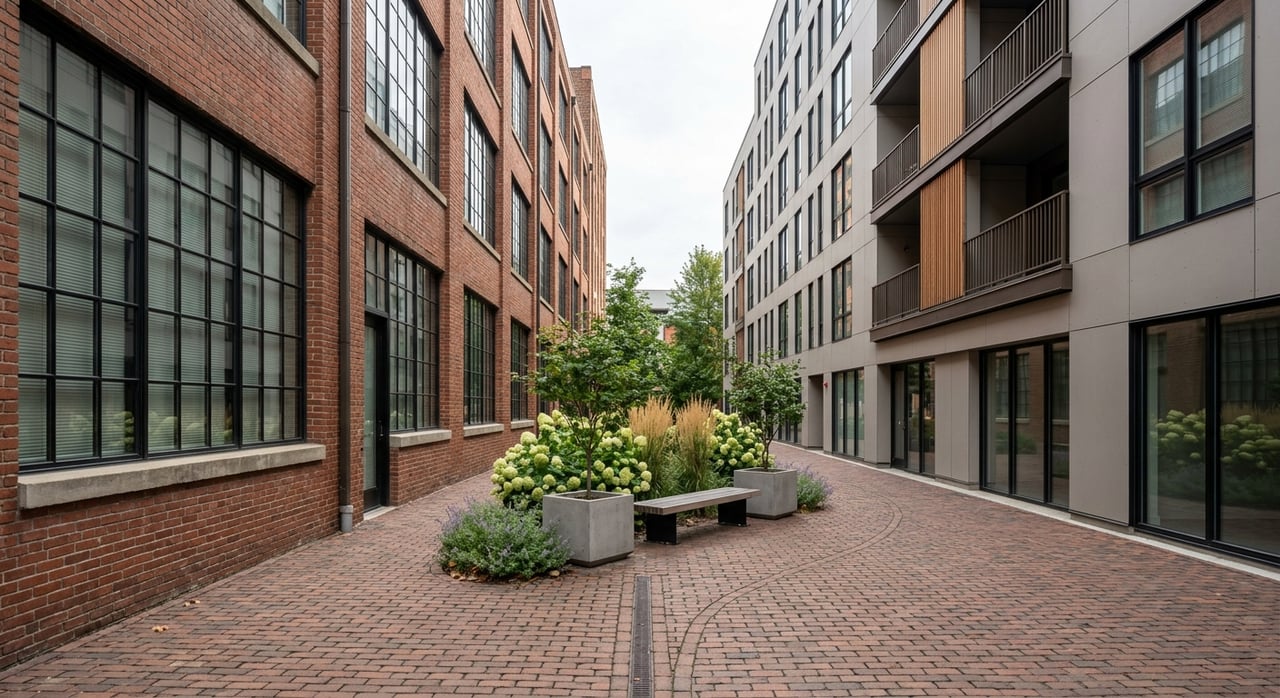
For buyers, that often means a choice between historic character and more contemporary urban living, sometimes within the same neighborhood block. Exposed industrial details, warehouse-style architecture, and converted mill buildings help create a look and feel that is harder to replicate in newer downtown areas.
This setup can also appeal to people who want a lower-maintenance lifestyle. If your goal is to enjoy city living, access culture and parks, and spend less time on exterior upkeep, the Mill District can check a lot of boxes.
Getting around is relatively easy
Transportation is one of the neighborhood’s practical strengths. Metro Transit says U.S. Bank Stadium Station serves both the Blue and Green lines and sits in East Town, with the Stone Arch Bridge just a couple of blocks away.
The Guthrie also highlights nearby bus service, light rail, bike-lane access, and parking. For residents, that creates flexibility whether you commute regularly, work hybrid, or simply want options beyond driving every day.
This does not mean every resident lives car-free, but it does mean the neighborhood supports that possibility better than many areas do. If walkability and multimodal access matter to you, the Mill District has a strong case.
Mill District vs. other downtown areas
If you are choosing between downtown Minneapolis neighborhoods, the Mill District offers a very specific vibe. Compared with the broader downtown core, which the City of Minneapolis is planning as a more housing-heavy and service-rich 24-hour district, the Mill District stands out as a riverfront- and heritage-oriented subarea.
In practical terms, that means your surroundings may feel more anchored by parks, trails, historic structures, and cultural destinations. The experience is often less about a traditional central business district feel and more about living in a preserved riverfront environment.
Compared with the North Loop, the contrast is also useful. The North Loop is often associated with restaurants, boutiques, taprooms, live music, and sports access, while the Mill District is more defined by riverfront scenery, museum and theater uses, and open space.
Neither is better across the board. It really depends on what you want your daily routine to look like and what kind of setting feels most like home.
Who tends to love living here
The Mill District often appeals to buyers who want downtown convenience without giving up access to nature and culture. If you like the idea of walking paths, skyline views, theater, and historic surroundings all being part of daily life, this neighborhood may feel like a natural fit.
It can also make sense if you are drawn to condos or lofts with character. Buyers who want a more design-forward urban lifestyle often appreciate the mix of industrial history and modern residential use here.
For downsizers, first-time condo buyers, and professionals relocating to Minneapolis, the neighborhood offers a compelling balance. You get a highly recognizable part of the city with a lifestyle that feels active, connected, and manageable.
What to consider before buying
As with any urban neighborhood, it helps to be clear on what you want most. The Mill District is best for buyers who value a condo or loft lifestyle, riverfront access, and a neighborhood identity rooted in history and culture.
If you are looking for detached homes, larger private yards, or a more residential streetscape, this may not be the right match. But if your priority is living near parks, trails, museums, and transit in a downtown setting, the Mill District stands apart.
It is also worth thinking about the kind of urban experience you want. Some buyers prefer nightlife and retail concentration, while others are drawn to scenery, architecture, and cultural landmarks. The Mill District leans strongly toward the second group.
If you want help comparing Mill District condos and lofts with other downtown Minneapolis options, Roost Real Estate offers the kind of local, high-touch guidance that can make your search feel much more focused and informed.
FAQs
Is the Mill District in Minneapolis walkable?
- Yes. The neighborhood is anchored by Mill Ruins Park, the Stone Arch Bridge, riverfront trails, and cultural destinations designed for walking and biking.
What types of homes are in the Mill District?
- Most homes are condos, lofts, and mixed-use residential properties, including historic loft conversions and newer urban buildings.
What is daily life like in the Mill District?
- Daily life often includes riverfront walks, park access, nearby dining, year-round cultural venues like the Guthrie, and seasonal shopping at the Mill City Farmers Market.
How is the Mill District different from the North Loop?
- The Mill District is more centered on riverfront scenery, parks, history, museums, and theater, while the North Loop is more closely associated with boutiques, restaurants, taprooms, and sports access.
Is the Mill District a good fit for condo buyers?
- It can be a strong fit if you want a low-maintenance urban home with historic character, walkability, and close access to parks, trails, and transit.