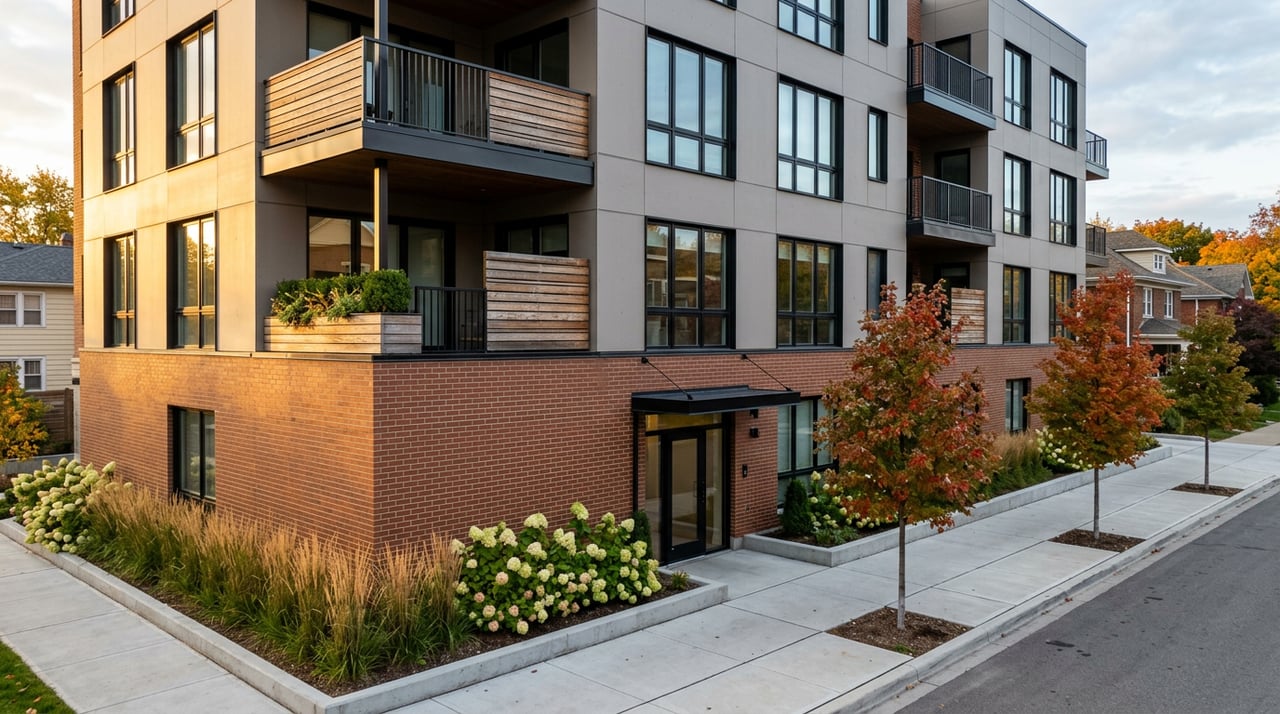
For years, a Mill District seller's first calls were to a stager and a photographer. In the second half of 2026, that order is wrong. Since August 3, 2026, every conventional condo loan in a building with more than ten units runs through Fannie Mae's Full Review, and the streamlined path high-equity buyers used to lean on is gone. That means your building has to qualify before your unit does, and the file that decides it lives with your association, not your agent.
The seller's leverage in a Mill District listing now sits in the HOA's document binder. Everything else, from the linen on the bed to the price on the sheet, is downstream of what that binder says.
The Deadline That Reshaped Your Buyer Pool
Fannie Mae and Freddie Mac issued coordinated policy updates on March 18, 2026 through Lender Letter LL-2026-03. Three dates in that letter matter for anyone listing this year. Master property insurance policies got a new $50,000 per-unit deductible cap for loan applications dated on or after July 1, 2026. The Limited Review and Streamlined Review pathways were retired on August 3, 2026, so every unit in a project of more than ten units now defaults to Full Review. And on January 4, 2027, the minimum reserve funding requirement rises from 10% to 15% of annual budgeted assessment income, unless the association has a reserve study completed within the last three years and is funding at the highest recommended level in that study.
Sellers should read these together. A building that squeaks by on a 10% reserve line today can be looking at a mid-year budget change to hold warrantable status before spring 2027 buyers walk through. If the board does not act, conventional lenders will stop writing loans in the building, and buyers get pushed to portfolio and non-conforming products where LTV commonly caps around 70% to 80% and rates run materially higher. That is not a marketing problem. That is a smaller buyer pool.
What The Building Has To Show Before Your Unit Does
The Fannie Mae 1076 condo questionnaire your buyer's lender will send now asks about all of it: reserves, delinquency, insurance, litigation, and open critical repairs. If identified repairs to critical components exceed $10,000 per unit and the association lacks the funds, the project is ineligible, full stop. Order the file before you list, not after you have an accepted offer:
- The current operating budget with the reserve line item stated as a percentage of assessment income
- The most recent reserve study, ideally within the last three years, with the highest recommended funding level identified
- Master insurance declarations, showing the per-unit deductible relative to the $50,000 cap
- A current accounts receivable aging report showing fewer than 15% of owners are 60-plus days delinquent
- Board minutes for the past 12 to 24 months, especially anything about façade, garage, elevator, or roof projects
- Any pending or approved special assessment resolutions, with purpose, total cost, and collection timeline
- Litigation disclosures, with construction-defect and structural cases flagged separately from routine collection matters
If your building is a smaller boutique loft project of ten or fewer units, the expanded Waiver of Project Review may keep the process light. Most Mill District buildings, though, are well past that threshold.
Reading Your Building Against The New Rules
The Mill District's condo stock splits into two lending profiles under the new rules. Historic loft conversions like 607 Washington Lofts and Humboldt Lofts tend to run leaner budgets and can carry deferred maintenance risk on original envelopes, windows, and mechanicals. Newer amenity-forward buildings like RiverWest, Bridgewater, and The Legacy have larger operating budgets, professional management, and pools, fitness rooms, and concierge staffing to fund, which usually means more sophisticated reserve planning and, in the strongest cases, current reserve studies already in place.
Neither profile is automatically better under Full Review. A loft with modest dues, a current reserve study, and a fully funded plan can pass without issue. A high-amenity tower with a healthy monthly dues line but a baseline-funded reserve, now banned outright, can struggle. The relevant number is not the dues, it is the reserve contribution as a share of assessment income, and the currency of the reserve study behind it.
What The Comps Are Actually Saying
The regional headline numbers are calm. The Minneapolis Area Realtors monthly indicators put the median sales price at $410,000 with 42 days on market and 2.8 months of supply. Under those averages, condos are behaving differently than single-family. Realtor.com data cited by Minneapolis Area Realtors for March 2026 showed the average condo selling at 97.9% of final list price, compared with 99.2% for single-family homes. That 1.3-point gap is the pricing footprint of building-level scrutiny already showing up in closings.
Mill District pricing continues to read as a range rather than a single number. Recent snapshots put 55415 condos at a $424,000 median list, 55401 condos at a $409,900 median sale, and Downtown East at a $635,000 median across all home types. Sold examples this cycle have run from a one-bedroom at RiverWest at $262,800 to units in the $399,900 to $499,900 band, up to premium lofts closing at $1.0 million and $1.125 million.
Dues vary just as widely, and lenders are now reading them alongside reserves. Recent downtown building averages include:
| Building | Average Monthly HOA |
|---|---|
| Sable | $558 |
| Riverwalk Lofts | $641 |
| The Crossings | $693 |
| RiverWest | $786 |
| 5th Avenue Lofts | $795 |
| Bassett Creek Lofts | $998 |
A modest dues figure paired with an underfunded reserve is now a warning sign, not a selling point. If your building sits toward the lower end of this range, expect buyers' lenders to spend more time confirming that the reserve study, not the dues line, is doing the funding work.
The MCIOA Clock That Nobody Sets Early Enough
Minnesota's Common Interest Ownership Act adds a second timeline that catches sellers who wait. Under Minn. Stat. § 515B.4-107, the association must furnish the completed resale disclosure certificate within ten days of a request from the unit owner. The certificate itself has a shelf life: it must be dated no more than 90 days before the purchase agreement or the conveyance date. And a buyer who receives the certificate after signing has a ten-day right to rescind, which cannot be waived in the purchase agreement itself and can only be modified in a separate signed writing at least three days after delivery.
Two things follow. First, order the certificate at listing, not at accepted offer, because a late-stage rescission window collides directly with a buyer's Full Review timeline. Second, if the sale drags past 90 days, order a refresh. Title companies and buyers' lenders will not close on stale disclosures, and a hailstorm, an approved special assessment, or new litigation between the original certificate and closing can turn what looked like a clean deal into a rescission event.
Pricing Against A Split Buyer Pool
The practical result of all of this is that Mill District buyers now sort into two groups, and your list price is really a bet on which one shows up. Buyers with conventional financing need your building to pass Full Review cleanly. Cash and portfolio-loan buyers can absorb warrantability problems but will price them into their offer, often through concession requests tied to whichever line item in the packet they read as risk.
Sellers who front-load the association work usually see the payoff in three places: fewer contingency renegotiations after the lender's questionnaire comes back, fewer appraisal-adjacent surprises when the building's insurance dec page hits underwriting, and a defensible list price grounded in what a warrantable building in the Mill District has actually been fetching, rather than an average pulled across a split pool.
FAQ
Do these Fannie Mae changes affect FHA and VA buyers in the same way?
The changes described here are Fannie Mae and Freddie Mac Full Review rules. FHA and VA have their own project approval processes, but the underlying association data, reserves, insurance, delinquency, and litigation, moves the same way through each review.
If my building has fewer than eleven units, am I exempt?
Established condo projects with ten or fewer total units may qualify for the expanded Waiver of Project Review, provided the community is not part of a larger master association or multi-phase development. Most Mill District buildings exceed the threshold.
What if my building is already non-warrantable?
Sales still happen, usually to cash buyers or through portfolio and DSCR lenders with LTV caps commonly around 70% to 80%. Pricing has to reflect the narrower pool, and disclosure discipline matters even more.
How current does the reserve study need to be?
Under the new guidelines, a reserve study relied on in place of the 15% budget minimum must be completed or updated within the last three years by an independent qualified professional, and the association's budget must fund the highest recommended reserve allocation in that study.
If you own in the Mill District and are thinking about a 2026 or early-2027 sale, the smartest first move is a quiet read of your building's file against the new rules. Roost Real Estate works through association budgets, reserve studies, and insurance decs alongside your listing plan, so the paper trail is ready before the photographer arrives. Request a Private Consultation to walk your building's numbers before you set a list price.